Showing posts with label shiatsurose. Show all posts

Sunday, June 28, 2026

Help with acupressure & gum disease

A bit about acupressure and gum disease

While acupressure cannot cure gum disease or replace professional dental care, it is an excellent complementary tool to relieve gum swelling, toothaches, and jaw tension. Stimulating specific pressure points can boost blood flow, decrease inflammation, and trigger the release of natural endorphins.
Targeting the following specific acupressure points can help soothe your gums and relieve oral discomfort:
SI 18 (Quanliao / Cheekbone Crevice): Located directly below the outer corner of your eye in the hollow of the cheekbone. This point is widely used to treat swollen gums, tooth decay, and general oral pain. Press firmly with your fingertips for 1–2 minutes.
ST 6 (Jiache / Jaw Chariot): Located halfway between the corner of your mouth and the bottom of your earlobe. Clench your jaw and feel for the muscle that flexes; press firmly here to relieve jaw tension, toothaches, and facial pain.
LI 4 (He Gu / Union Valley): Found in the webbed area of skin between your thumb and index finger. Pinch this area using the thumb and index finger of your opposite hand to ease toothaches and inflammatory pain. (Note: Avoid this point if you are pregnant, as it can induce labor).
ST 7 (Xiaguan): Located in the depression just below your cheekbone, right in front of your ear. It opens up when your mouth is closed. Massaging this point relaxes jaw muscles and alleviates upper gum and tooth pain.

How to Apply Pressure:
Get into a relaxed, comfortable position and breathe deeply.
Use your thumb or a rounded object to press firmly but gently onto the pressure point.
Stimulate the area with a steady or circular motion for 1 to 2 minutes.
Always stop if you feel intense pain.


Disclaimer: Acupressure is for symptom management and should not be used as a substitute for professional dental treatments (like cleanings or root planing), especially if you have signs of infection or severe gum disease.
Sources: Medical News Today, Healthline, Dr (TCM) Attilo D'Alberto This is for informational purposes only. For medical advice or diagnosis, consult a professional. AI responses may include mistakes. Learn more

Monday, March 30, 2026

Relieving Neck and Shoulder Tension: The Power of Shiatsu and Acupressure

Modern life often leaves us "carrying the weight of the world" on our shoulders—literally. Whether it’s from hours at a desk, stress, or poor sleeping posture, neck and shoulder pain are among the most common physical complaints.
Shiatsu, a Japanese bodywork therapy based on Chinese medicine, offers a natural way to release this stored tension. By combining rhythmic pressure with specific acupressure points, you can encourage blood flow and trigger the body’s natural healing response.

Key Acupressure Points for Relief

Focusing on these specific points can help unlock "stuck" energy (Qi) and provide immediate comfort:
Jian Jing (Gallbladder 21): Located at the highest point of the shoulder muscle, midway between the outer tip of the shoulder and the base of the neck.
Benefit: Highly effective for lowering shoulder tension, easing neck stiffness, and reducing headaches.
Feng Chi (Gallbladder 20): Found at the base of the skull, in the hollows on either side of the large neck muscle.
Benefit: Great for relieving "text neck," migraines, and blurred vision caused by strain.
He Gu (Large Intestine 4): Located in the fleshy webbing between the thumb and index finger.
Benefit: While on the hand, this is a "master point" for releasing pain throughout the upper body, especially the neck and face.
Tian Zhu (Bladder 10): Located on the back of the neck, about one finger-width below the base of the skull on the prominent muscles.
Benefit: Helps soothe exhaustion, heavy shoulders, and cervical spine discomfort.

The Benefits of Shiatsu for Upper Body Pain

Why choose Shiatsu over a standard massage? Here is how it specifically targets the neck and shoulders:
Deep Muscle Release: Unlike superficial rubbing, Shiatsu uses leaning pressure to reach deeper connective tissues where chronic knots reside.
Improved Circulation: The pressure-and-release technique flushes the area with fresh oxygenated blood, helping to remove metabolic waste that causes soreness. Restoration of Range of Motion: Regular sessions help "unstick" the fascia, allowing your neck to turn more freely and your shoulders to drop away from your ears.
Nervous System Regulation: Shiatsu shifts the body from "fight or flight" into the parasympathetic "rest and digest" state, reducing the mental stress that often causes us to hunch.
Holistic Balance: By addressing the meridian lines, Shiatsu treats the root cause of the tension rather than just masking the localized pain.

Tips for a Better Experience

Breathe: Always exhale as pressure is applied to the point; this helps the muscle relax rather than tensing up against the touch.
Stay Hydrated: Drink plenty of water after a session to help your body process the toxins released from the muscle tissue.
Consistency is Key: While one session provides relief, chronic shoulder issues often require regular maintenance to fully resolve.
Have you tried acupressure for your neck pain before? Let us know which points work best for you in the comments below!

Tuesday, March 3, 2026

The Benefits of Shiatsu for Tennis Elbow and Frozen Shoulder

Chronic arm and shoulder pain can interfere with everyday life — from lifting a kettle to typing on a computer. Two common conditions I see in practice are Tennis Elbow and Frozen Shoulder.
Shiatsu offers a natural, holistic approach to reducing pain, restoring movement, and supporting the body’s healing process.
Let’s explore how.

💪 Shiatsu for Tennis Elbow

(Lateral Epicondylitis)
Tennis Elbow isn’t only caused by sports. It commonly affects:
Office workers
Hairdressers
Therapists
Parents lifting children
Anyone performing repetitive arm movements
It involves inflammation and micro-tears in the forearm tendons near the elbow joint.

🌿 How Shiatsu Helps Tennis Elbow

Shiatsu works along meridians that run through the arm to:
✔ Improve blood circulation to the tendons
✔ Reduce muscular tension in the forearm
✔ Support natural anti-inflammatory response
✔ Decrease pain signals through nervous system regulation
✔ Encourage tissue repair
By addressing both muscular and energetic blockages, Shiatsu treats more than just the symptom.

✨ Important Acupressure Points for Tennis Elbow

🔴 LI10 (Shousanli) Located three finger-widths below the elbow crease on the outer forearm. Supports circulation and reduces forearm pain.
🔴 LI11 (Quchi) Found at the outer end of the elbow crease. Helps clear heat and inflammation.
🔴 LI4 (Hegu) Between the thumb and index finger. A powerful point for relieving upper limb pain.
(Avoid strong stimulation during pregnancy.) LI4
🔴 SJ5 (Waiguan) Three finger-widths above the wrist crease on the outer forearm. Improves joint mobility and reduces stiffness.

❄️ Shiatsu for Frozen Shoulder

(Adhesive Capsulitis)
Frozen Shoulder is characterized by:
Severe stiffness
Limited range of motion
Deep aching pain
Gradual onset
It occurs when the shoulder joint capsule becomes inflamed and tight.

🌿 How Shiatsu Supports Frozen Shoulder Recovery

Shiatsu techniques:
✔ Relax surrounding muscle groups
✔ Improve lymphatic flow
✔ Reduce guarding in the nervous system
✔ Encourage gentle joint mobility
✔ Support emotional stress release (shoulders often hold stress)
Because Shiatsu works holistically, it treats both physical restriction and energetic stagnation.

✨ Key Acupressure Points for Frozen Shoulder

🔴 LI15 (Jianyu)
Located at the front of the shoulder.
Improves shoulder mobility and reduces pain.
🔴 SJ14 (Jianliao)
Posterior shoulder point.
Relieves deep joint stiffness.
🔴 SI9 (Jianzhen)
Just above the back armpit fold.
Releases tight shoulder muscles.
🔴 GB21 (Jianjing)
Midway between neck and shoulder.
Reduces upper shoulder tension
(Avoid strong stimulation during pregnancy.)

🌿 Why Shiatsu Is Effective for Joint Conditions

Shiatsu is rooted in Traditional East Asian Medicine principles and works through:
Meridian stimulation
Pressure-point therapy
Nervous system balancing
Improved energy (Qi) circulation
Unlike deep tissue massage, Shiatsu applies sustained, intentional pressure that allows tissues to soften naturally — making it especially beneficial for chronic conditions.

🌸 When to Seek Additional Support

While Shiatsu is highly supportive, always consult a medical professional if you experience:
Sudden severe pain
Loss of strength
Numbness or tingling
Injury after trauma
Shiatsu works beautifully alongside physiotherapy and medical care.
🌿 Final Thoughts
Tennis Elbow and Frozen Shoulder don’t have to define your movement or quality of life. With consistent Shiatsu treatments, the body can regain mobility, reduce inflammation, and restore natural balance.
If you’re in Cape Town and ready to experience therapeutic Shiatsu, I would love to support your healing journey.
— Rose 🌿

Wednesday, March 23, 2022

Shiatsu an its beneficial effect

Shiatsu is a Japanese form of massage therapy that uses the fingers and palms to apply pressure on the body’s acupressure points. It is believed that by applying pressure to these points, energy flow can be restored, which will in turn promote healing.
A shiatsu session typically lasts for about an hour and involves a variety of techniques including acupressure, stretching and deep tissue massage. It also includes stretching of muscles and joints, as well as manipulating the spine.

Thursday, October 7, 2021

Shiatsu and pain relieving benefits

Pain Relieving Benefits

Shiatsu assists in pain relieving qualities with the secretion of endorphins. Endorphins are chemical messengers within the brain which act as a natural analgesics, suppressing pain as well as regulating the body’s response to stress and determining your mood. The high that runners and swimmers get is the result of the release of endorphins during physical exertion. Shiatsu stimulates the release of this natural pain killer. Enkephalins are found in high concentration in the brain as well as in the cells of adrenal medulla. In response to pain, norepinephrine, a hormone that is activated in fight-or-flight response is released along with endorphins.

The reason why Shiatsu is so successful is the fact that first of all the whole body is treated and then the treatment proceeds by treating the places that reflect symptoms of a disease. For instance, if you suffer from pain in your right knee, the therapist will also treat your head, shoulders, neck, and lower back. The left knee will get at least as much attention as the right knee, as the left knee is now put under more pressure.

Origin of pain

The origin of the pain is not always caused by the painful area, but could just as well be found somewhere else in the body. Back problems, for instance, are a well-known symptom of organs that are out of balance. The Shiatsu massage brings the whole body back in balance in a natural way.

Shiatsu is based on the idea that the patient must be treated, not the illness.

Almost all complaints and disorders can be treated with Shiatsu. Examples are for instance: back troubles, headaches, and stress, breathing and digestion problems. In case of overtiredness, emotional problems and stress-related complaints, Shiatsu can also have a positive influence. Dopamine: Often called the "happy hormone," dopamine results in feelings of well-being. A primary driver of the brain's reward system, it spikes when we experience something pleasurable.

The Meridians (energy lines)

(American Organization for Bodywork Therapies of Asia (aobta.org) "The meridians form a network — like a system of roads, highways, and country lanes. Acupoints are found at the major junctions, crossroads, overpasses, bus stops and traffic lights. The subtle art of assessment and treatment requires the selection of specific meridians and acupoints that can be used to unblock traffic jams and enhance the free flow of traffic that results in homeostasis."

Friday, May 28, 2021

Tools used in Shiatsu

The Shiatsu Therapist uses various parts of the limbs as ‘tools’. The main tools are the palms, thumbs and fingers. The second set of tools, but still important are forearms, elbows, knees and feet. So you will find the therapist will use some or most of these tools during the course of your session.
The palms and fingertips are used at the start of session to feel for areas in your body that may need loosening up, calming down or strengthening. The fingertips are rich in sensory nerve endings and are therefore sensitive. The Shiatsu Therapist will then use the thumbs or fingertips if specific pressure is required to a pressure point. If a general area is worked on they will use their palms. If strong pressure is called for then forearms, elbows, knees or feet may be used. Please contact me on whatsapp for an appointment +2782 572 7443

Thursday, May 11, 2017

A bit about Shiatsu

Shiatsu is based on the ancient art of Japanese acupressure massage and the philosophies of Traditional Chinese Medicine.

Shiatsu originated in China at least 2000 years ago, where it was discovered that causes of ailments and the remedies could be changed through simply a change in diet and a way of life. The use of massage and acupuncture was also recommended. In Japan the practise was developed into a particular technique of massage, it was known as anma or amma, ancient oriental massage. The therapy you get today has evolved from a mixture of East and West. Shiatsu, meaning broken down, shi means fingers and atsu means pressure. It has evolved more than just finger pressure, from amma which parts of the body were pressed or rubbed.

Shiatsu Treatment works on three levels:

Physical: When the Giver's finger or thumb makes contact with the skin of the Receiver, even through the light clothing recommended for receiving a treatment, heat is generated, melting the gel around cells in the vicinity. As the gel becomes a solution, suspended toxins are released into the lymphatic system to be eliminated through the cardiovascular and respiratory systems Energetic: the solution better allows conduction of the Qi's healing message through the connective tissues and organ-meridian networks regulating the body-mind systems. Mental/Spiritual: Connection with Spirit and conscious use of Intuition are supported by Intention:

Benefits of Shiatsu:

Improves general well -being Release tension and promote relaxation Back pain / Neck and shoulder pain Headaches / migraines Anxiety/stress Insomnia Arthritis pain Frozen Shoulder Tennis elbow Whiplash Shiatsu creates a feeling of good health in the whole person, not just in the physical sense. There are many benefits for both the giver and the receiver of shiatsu, both on a physical and spiritual level.

How does Shiatsu work?

Using physical touch to assess the flow of energy Qi throughout the body and thereby correcting imbalances by pressing, hooking, sweeping, rocking, patting, lifting, plucking lifting, rolling and brushing. Stretches are also used to manipulate by improving flexibility and allowing the energy Qi to flow around the body. Tonifying or dispersing energy, stretching, breathing, stress releasing and meditation techniques are utilized to bring the person into balance.

How safe is Shiatsu?

Shiatsu is safe for everyone and particularly beneficial for pregnant women, though some adjustment is needed, even small children and the elderly can be treated. The basic guidelines as to when and where not to give or receive Shiatsu are similar to those of any treatment which affects the flow of energy, blood and body fluids through the system. These would include times of high fever, especially when accompanied by local infection or inflammation or by infectious disease of any sort; cancer; heart disease; and areas where there may be cuts, bruises, scar tissue, injury or swelling. However, since Shiatsu techniques vary from the very dynamic to the soft and gentle, it could still be possible to use the supportive quality of some of the holding techniques in most of these situations.

Shiatsu offered

Shiatsu Head Neck & Shoulders (20minutes) I do it either in a massage chair or seated in a chair. Massage covers: hands. arms, neck, shoulders, upper back, head and face No oils used on body, you remain fully clothed, I use a body cloth. Extremely good for relieving pain and tension in the upper body.

Shiatsu Full Body (1hour 15 minutes)

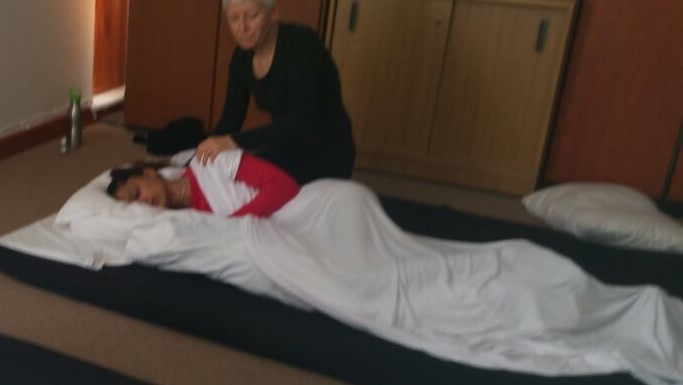
I do this on a mattress on the floor, or on a massage table - it covers the whole body.

After effects of Shiatsu

A deep relaxation occurs and the stimulus to the major body systems, you may have some healing reactions. Some people feel cold or flu-like symptoms, aches and pains, or headaches after the first treatment. These symptoms will only last for a day or so and usually subside with each subsequent treatment. If these symptoms persist, please consult a qualified physician immediately. In general, any such effects you may experience are positive signs from your body telling you it is making an attempt to correct its own condition in a natural way. These are signs of elimination and the beginning of the healing process.